















































Attention: Pantry Moths — Uninvited Guests in Your Supplies
You open the pantry cupboard and suddenly something is crawling in the flour, nuts, or dried fruit? Then you might be dealing with the Indian meal moth (also known as the pantry moth). It is one of the most common pantry pests found in households and is primarily found in supplies such as dried fruit, nuts, muesli, rice, flour, or pet food. The good news: with a clear plan, you can reliably get pantry moths under control — without unnecessary chemicals.
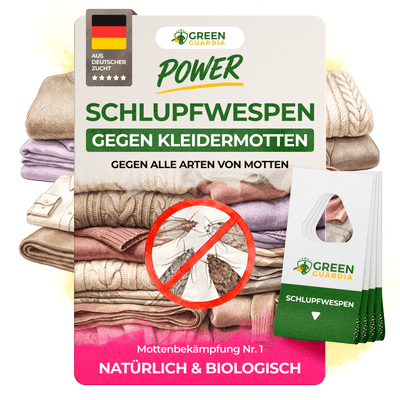
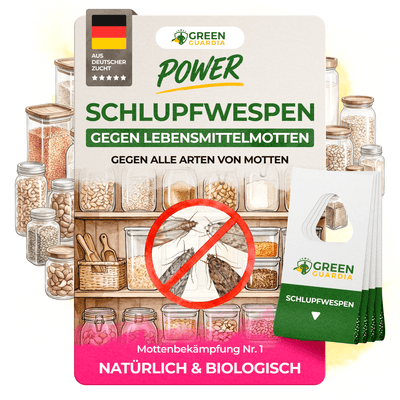
If you are looking for a natural, proven solution, trichogramma wasps for pantry moths are a particularly helpful tool. They work where you often cannot see moths: directly on the eggs — in crevices, drill holes, and hidden corners of the cupboard.
🦋 Tip: Moth control is always an interplay of hygiene + monitoring + natural support. That is exactly why trichogramma wasps for pantry moths are ideal — because they reduce hidden eggs while you consistently secure your supplies.
Causes: Where do pantry moths come from?
Pantry moths almost never come into the house “from outside” — in most cases, they are introduced through purchased groceries. Eggs or larvae can already be inside the packaging, especially in products that have been stored for a long time: dried fruit, nuts, grains, muesli, flour, baking ingredients, legumes, or pet food.
Why do they spread so quickly?
- Warm kitchens accelerate their development (heating, summer, heat from appliances)
- Many hiding spots (cracks, screw holes, cupboard edges)
- Open supplies or soft packaging that is easily penetrated
- Undiscovered eggs lead to new generations — even after cleaning out the cupboard
This is exactly why it makes sense, alongside clearing out and cleaning, to opt for a solution that also covers the “invisible” phase — e.g., by using trichogramma wasps for pantry moths.
Detection: How do you recognize an infestation?
A pantry moth infestation is often only noticed once a fair amount of damage has already occurred. Therefore, keep an eye out for typical signs — especially in your pantry, drawers, and food items that have been sitting for a long time.
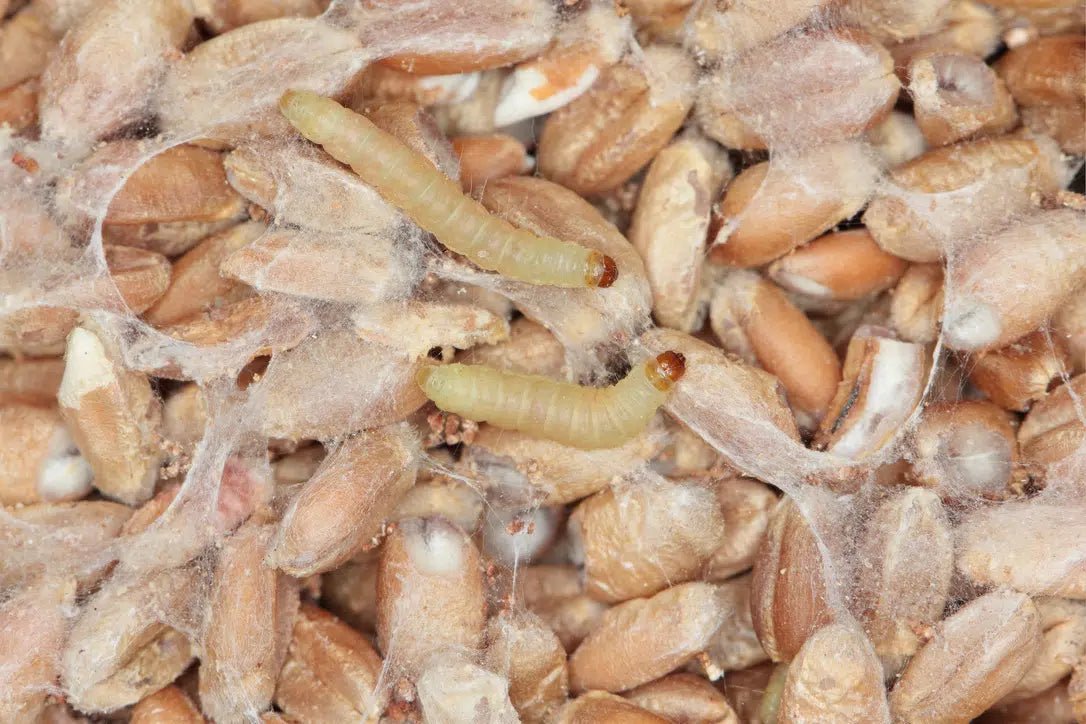
- Fine webbing in packaging or on food
- Crumbly clumps (droppings, webbing residue) in flour, muesli, or nuts
- Small, pale larvae (worm-like) crawling around
- Flying moths in the kitchen — often near windows or lights in the evening
- Pupae casings or webbing in cracks and corners of the cupboard
✅ Tip: If you see webbing, it is usually a sign that several stages are already circulating. It is worth taking consistent action immediately — and using trichogramma wasps for pantry moths in parallel to cover eggs in hidden areas.
Control: What really works against pantry moths?
To get rid of pantry moths permanently, you need a process that takes all stages into account: removing infested food, cleaning the cupboard, treating hiding spots, and subsequently storing supplies securely. Here is the step-by-step guide:
1) Consistently dispose of infested supplies
Everything with webbing, larvae, or “crumb tracks” must go — best to take it outside immediately in a sealed bag. Important: Check seemingly “okay” packages nearby as well, because moths travel.
2) Empty the cupboard completely and clean thoroughly
- Vacuum joints, drill holes, corners, and edges
- Wipe down with hot water/vinegar water (do not get wooden crevices too wet)
- Dispose of the vacuum cleaner bag immediately (otherwise, they might migrate back out)
3) Naturally reduce hidden eggs
The biggest challenge with pantry moths is that eggs are often invisible in cracks. This is where trichogramma wasps for pantry moths are particularly useful: they hunt down moth eggs and ensure that no new generation of moths develops from them. That is what makes the method so popular — especially in the pantry, where you don’t want to spray chemicals around.
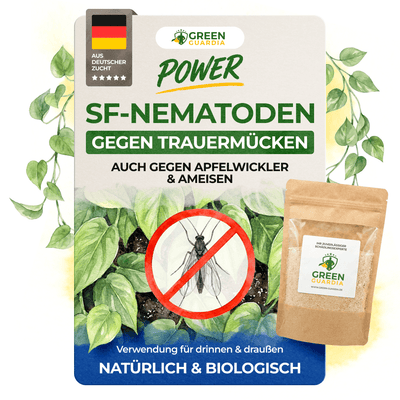
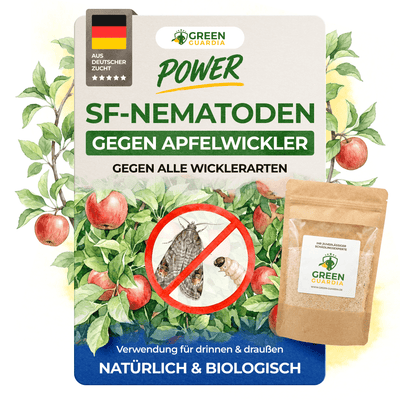
Note on classification: The second linked product (SF nematodes for codling moths) is a natural solution for outdoor use (orchards) and is not part of standard pantry pest control. However, if you are also tending to fruit trees and keeping an eye on fruit pests, it can be an additional, natural component depending on the season.
4) Store supplies in a moth-proof way in the future
- Keep all dry foods in airtight containers (glass/metal/hard plastic jars)
- Check new purchases first — especially nuts, dried fruit, muesli, and pet food
- Perform quick regular checks: “One look saves weeks of stress”
Prevention: How to make sure the pantry moth never comes back
The best measures are those you can easily maintain in everyday life. Small routines make a big difference — especially since pantry moths are often reintroduced via new shopping.
- Keep stock small: don’t over-order; buy fresh as needed
- Transfer to containers before storing: original packaging is the weak point
- Regular cupboard checks (corners, shelves, drill holes)
- For recurring problems: proactively use trichogramma wasps for pantry moths to reduce hidden eggs early on
Pantry Moth FAQ
How long does it take to get rid of pantry moths?
That depends on how early you start and if eggs are already hidden in cupboard crevices. If you consistently clear things out, clean, and use natural support in parallel (e.g., trichogramma wasps for pantry moths), many households see significant improvement after a few weeks — the important thing is to interrupt the development chain.
What is the difference between a pantry moth and a clothes moth?
The pantry moth is a type of food moth and lives in food supplies (nuts, dried fruit, flour, muesli). Clothes moths, on the other hand, attack textiles (wool, fur, carpets). Control and measures differ significantly because their habitats are completely different.
Why do I still see moths even though I have cleaned everything?
Often, there are still eggs or pupae in cracks, drill holes, or behind shelves. A new wave can emerge from these remnants. This is exactly why trichogramma wasps for pantry moths are useful, as they can specifically target and reduce hidden eggs.
Are trichogramma wasps safe in the home?
Trichogramma wasps are tiny, inconspicuous, and specialized in moth eggs. They are not “stinging” insects and disappear as soon as there are no more moth eggs. That is why trichogramma wasps for pantry moths are frequently used as a natural solution in the pantry.
Why is there a link to SF nematodes for codling moths here?
The product SF nematodes for codling moths is a natural solution for orchards and deals with fruit pests on apple trees — not the pantry. If you are tending to fruit trees alongside your kitchen, it may be seasonally relevant. For pantry moths in the home, however, the appropriate focus is mainly on cupboard measures and trichogramma wasps for pantry moths.
Take action now:
If you stop the infestation now, you will save yourself weeks of trouble: clear out consistently, clean thoroughly, and secure your supplies in airtight containers. For natural support against hidden eggs, use trichogramma wasps for pantry moths. And if you are additionally protecting fruit trees in your garden, SF nematodes for codling moths can be a seasonally complementary component — for a healthy harvest all around.