































































Effectively Combat Pantry Moths: Natural Methods for Your Kitchen
Pantry moths in the kitchen are more than just a nuisance: they infest dry goods, multiply quickly, and love to hide in cracks, drill holes, and behind cabinet back panels. If you want to combat pantry moths, you need a plan that not only removes visible moths but, above all, breaks the cycle of eggs, larvae, and new moths.
In this guide, I will show you how to identify the causes, safely detect an infestation, act effectively using natural methods, and protect your pantry goods permanently – without unnecessary chemicals in living and food preparation areas.
Causes: Where do pantry moths come from?
In most households, pantry moths are brought in – often via already infested packages from the supermarket or dry goods stored for a long time. A single unnoticed infestation is enough for moths to establish themselves in the kitchen.
Which food products are particularly affected?
- Flour, semolina, rice, pasta, muesli
- Nuts, almonds, seeds, dried fruits
- Cocoa, chocolate, baking ingredients
- Herbs, tea, spices
- Pet food and birdseed
Why does a moth infestation often recur?
Because eggs and larvae hide in hard-to-reach places: cabinet crevices, drill holes, behind strips, in packaging folds, or under shelves. Anyone who only removes "visible moths" usually misses the next generation.
Detection: How do you recognize pantry moths?
The sooner you detect the moth infestation, the easier it is to combat. Pay particular attention to these typical signs:
- Webbing (fine threads) in food or on packaging edges
- Crumbs and clumps in flour, muesli, or nuts
- Larvae (small, light-colored caterpillars), often found on walls or ceilings
- Moths (small butterflies/moths) in the kitchen, especially in the evenings
- Holes in paper or plastic packaging
Tip: If you find larvae on the wall, this is a strong sign: they often leave the food to pupate in sheltered spots. In that case, "just cleaning out" is usually not enough – you need a systematic approach.
Combatting: Natural methods that really work
To effectively combat pantry moths, these 4 steps are particularly proven. They can be easily combined and usually lead to the goal the fastest.
1) Consistently discard infested supplies
- Check all dry products – including "unopened" packages.
- Pack infested items airtight and dispose of them immediately (ideally outside the home).
- It is better to replace questionable products than to spread the infestation further.
2) Thoroughly clean kitchen cabinets (crevices & drill holes!)
- Empty cabinets completely, remove shelves.
- Carefully vacuum and wipe down all edges, joints, drill holes, and hinges.
- Check especially behind back panels/strips – pupae are often located there.
- Finally, let everything dry well so that supplies can be put back into a clean space.
3) Biological support: Trichogramma wasps against pantry moths
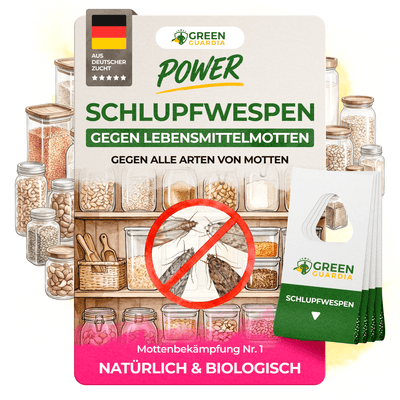
One of the most effective natural methods is the targeted use of trichogramma wasps against pantry moths. They are tiny, inconspicuous, and help break the moth cycle by specifically finding moth eggs.
Especially if you want to solve the problem sustainably (and not just "wipe it away briefly"), trichogramma wasps against pantry moths are a strong supplement to cleaning – especially in cupboards, pantries, storage rooms, or anywhere dry goods are stored.
4) Monitoring & routine over several weeks
- Check cabinets 1–2 times per week (edges, drill holes, back panels).
- Store new food separately at first and check it before putting it away.
- In the event of a recurring infestation, provide early biological support again.
Prevention: Permanently avoid pantry moths
With a few simple habits, you can significantly reduce the risk of pantry moths. The key is to store supplies in a way that moths cannot find a starting point.
- Airtight storage jars (glass/metal with a seal) instead of open bags
- Herbs & tea must also be tightly sealed – they are often underestimated
- First in, first out: use older stock first
- Wipe out cabinets regularly, especially crevices & edges
- In case of increased risk or after an infestation, provide support early with trichogramma wasps against pantry moths
Frequently asked questions about pantry moths
How long does it take to get rid of pantry moths?
That depends on the severity of the infestation. If you consistently dispose of infested supplies, clean cabinets including all crevices, and break the cycle, the infestation pressure can often be significantly reduced within a few weeks. Monitoring over several weeks is important.
Why do I find larvae on the wall or ceiling?
Larvae often leave food to find a protected place for pupation. That is why they are often seen outside the packaging – especially on walls, edges, or in corners.
How do trichogramma wasps help against pantry moths?
Trichogramma wasps against pantry moths provide biological support by specifically finding moth eggs, thus interrupting the moth cycle. This is particularly helpful in areas where eggs are easily hidden.
Which storage containers are best for prevention?
The most reliable are airtight containers made of glass or metal with a seal. Thin bags, clips, or cardboard boxes often do not provide enough protection because moths can get to food through even the smallest openings or packaging folds.
Take action now:
If you want to combat pantry moths, start today with a thorough check of your supplies, clean your cabinets including all crevices, and interrupt the moth cycle sustainably. For natural support in your kitchen, trichogramma wasps against pantry moths are ideal – they protect your supplies and storage areas biologically and for the long term.


