



























































Fur beetles: How to identify & get rid of larvae in textiles sustainably
Fur beetles (carpet beetles and relatives) are typical material pests found in homes. The adult beetles are usually harmless – the damage is caused by the larvae, which feed on animal materials such as wool, fur, feathers, or hair. Here you will learn how to safely identify fur beetles and permanently curb them.
What are fur beetles?
Various species from the Dermestidae family are referred to as fur beetles. They are also frequently called carpet beetles. Adult beetles are sometimes found by windows, as they are attracted to light. However, the actual damage is caused by the larvae: They feed on textiles and organic materials – often hidden in closets, carpets, or cracks.
How to recognize an infestation
- small beetles on window sills or in the home
- Larvae: brownish, elongated, often with bristly hairs ("hairy")
- Larval molting remains (fine, "empty" larval skins)
- irregular feeding marks/holes in wool, felt, carpets
What is typically attacked?
- Wool sweaters, scarves, hats
- Carpets made of natural fibers, felt, upholstery
- Fur, feathers, leather (depending on the material)
- Animal hair, dust, dead insects (food source for larvae)
Why does an infestation occur?
- rarely moved/stored textiles (undisturbed for a long time)
- dust, hair, and organic residues in cracks
- introduction via second-hand textiles, carpets, or stored goods
- breeding grounds in hidden areas (baseboards, undersides of carpets)
What to do in case of an infestation? (natural & sensible)
1. Secure affected textiles
- Wash textiles in hot water (if possible) or have them professionally cleaned
- alternatively: pack airtight and store separately
2. Find breeding grounds & clean thoroughly
- vacuum thoroughly: carpet edges, baseboards, closet floors, cracks
- dispose of vacuum cleaner bags immediately
- check behind furniture and under carpets
3. Order & prevention
- store natural textiles clean and dry (ideally in sealed boxes)
- move/air out regularly
- reduce dust and animal hair
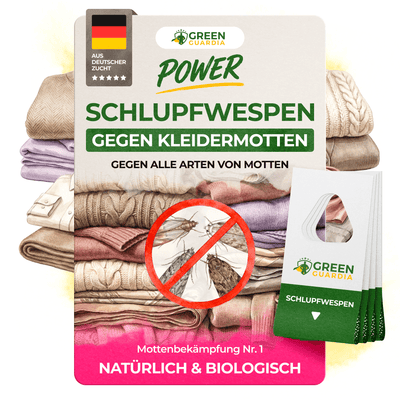
Beneficial insects against fur beetles: Lariophagus distinguendus
Lariophagus distinguendus (warehouse wasps) are a natural support against certain material and stored-product pests. In appropriate situations, they can help disrupt the development cycle by parasitizing breeding stages. They are harmless to humans and disappear on their own as soon as no more hosts are present.
FAQ about fur beetles
Do fur beetles bite or are they dangerous?
Fur beetles do not bite. The larvae are problematic because they damage materials. For sensitive individuals, larval hairs can cause skin irritation.
Why do I find beetles by the window?
Adult beetles are attracted to light. This often means: There are larvae/breeding grounds in the home that you should locate.
Can I save infested clothing?
Often yes: Wash (as hot as possible) or use professional cleaning. It is important to clean the area thoroughly afterwards so no offspring appear.
How can I prevent them?
Store natural textiles clean, vacuum regularly (edges/cracks), keep rarely used items in sealed boxes, and move/air them out occasionally.