





























Mealybugs: Identifying cottony clusters & natural control
Mealybugs are sap-sucking pests that form distinctive white cottony clusters on leaves, stems, and in leaf axils. They often produce honeydew, which makes leaves sticky and promotes sooty mold. Here, you'll learn how to identify mealybugs and why lacewing larvae and Cryptolaemus can help as beneficial insects.
What are mealybugs?
Mealybugs are members of the scale insect family. They suck plant sap, weakening leaves, shoots, and young plant parts. Their characteristic waxy, cottony protective layer helps protect them from dehydration, making them harder to control.
Mealybugs are particularly fond of nesting in leaf axils, at branch junctions, on the undersides of leaves, on roots, or along the rim of the pot. As a result, an infestation is often not discovered until several white clusters are already visible.
How to recognize an infestation
- White, cottony clusters in leaf axils, on stems, or on leaf undersides
- Sticky leaves or stems caused by honeydew
- Black film on the honeydew caused by sooty mold fungi
- Weakened growth, yellowish leaves, or leaf drop
- Stunted young shoots in cases of severe infestation
Which plants are frequently affected?
- Houseplants such as Ficus, Dracaena, Monstera, orchids, or Philodendron
- Succulents and cacti
- Citrus plants and Mediterranean container plants
- Warm-growing ornamental plants with soft new growth
What causes an infestation?
- Introduction via new plants
- Stress caused by relocating, drought, or improper care
- Poor air circulation and overly crowded plant arrangement
- Over-fertilization, especially with too much nitrogen
- Plants weakened by unfavorable lighting or watering conditions
What to do in case of infestation? Natural & sensible steps
1. Remove visible mealybugs
- Isolate the plant to prevent the infestation from spreading
- Gently wipe off visible cottony clusters with a cloth or cotton swab
- Prune heavily infested shoots if the plant can tolerate it
- Check leaf axils and branch junctions very thoroughly
2. Clean the plant & reduce honeydew
- Rinse the leaves with lukewarm water or wipe them off carefully
- Remove sticky areas to stop sooty mold from spreading further
- Keep the rim of the pot and the surrounding area clean
3. Improve conditions
- Ensure better air circulation
- Maintain consistent care and avoid drought stress
- Do not over-fertilize, as soft growth can encourage mealybugs
- Check regularly, especially new growth
Beneficial insects against mealybugs
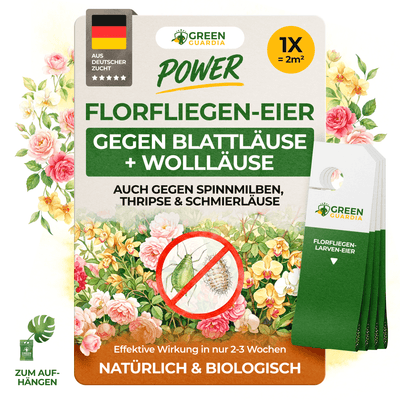
Lacewing larvae and Cryptolaemus (the Australian ladybird beetle) are particularly effective against mealybugs. Both beneficial insects consume mealybugs but differ in terms of their application area, efficacy, and behavior.
Because mealybugs are well protected by their waxy coating, using beneficial insects is particularly effective if you first reduce the number of visible clusters. This allows the beneficials to better reach the remaining insects and reduce the infestation in the long term.
1. Lacewing larvae – versatile helpers against young mealybugs
Lacewing larvae are very voracious predators and are often called "aphid lions." They don't just eat aphids; they also feed on young mealybugs and other soft-bodied pests. They are a very good form of natural support, especially for light to moderate infestations.
- Effective against: young mealybugs, smaller life stages, and other soft-bodied pests
- Ideal for: light to moderate infestations
- Particularly suitable for: houseplants, ornamental plants, and mixed pest infestations
- Why they help: Lacewing larvae actively hunt for prey and consume many small pests in a short time
- Advantage: very flexible to use, even if aphids or other pests are present simultaneously
2. Cryptolaemus – specialists against mealybugs
Cryptolaemus montrouzieri, also known as the Australian ladybird beetle, is one of the most important beneficial insects for controlling mealybugs. Both the larvae and the adult beetles feed on mealybugs. Cryptolaemus is particularly valuable because its larvae look whitish and waxy themselves, allowing them to penetrate well into mealybug colonies.
- Effective against: mealybugs at various stages of development
- Ideal for: moderate to heavy infestations
- Particularly suitable for: larger plants, winter gardens, and greenhouses
- Why it helps: Cryptolaemus is specialized in mealybugs and specifically hunts through colonies
- Advantage: very effective against visible mealybug nests and higher levels of infestation pressure
Lacewings or Cryptolaemus – which is better?
| Beneficial insect | Particularly effective against | Best application |
|---|---|---|
| Lacewing larvae | young mealybugs and other soft-bodied pests | light to moderate infestation, houseplants, mixed pest pressure |
| Cryptolaemus | mealybugs in colonies and multiple stages | moderate to heavy infestation, larger plants, winter gardens, or greenhouses |
FAQ about mealybugs
Is that "cotton" or mold?
Usually, it is waxy secretions from the mealybugs. Mold tends to look flat and not like a clump. Honeydew can also promote sooty mold.
Why are the leaves sticky?
That is honeydew—a sugary excretion from sap-sucking pests. Sooty mold can grow on top of it, forming a black layer.
Do lacewings help against mealybugs?
Yes. Lacewing larvae eat young mealybugs and other soft-bodied pests. They are particularly suitable for light to moderate infestations or if other pests are present simultaneously.
When is Cryptolaemus useful?
Cryptolaemus is particularly useful for heavier infestations and visible mealybug colonies. The Australian ladybird beetle is a specialized predator against mealybugs.
Should I isolate the plant?
Yes, if possible. Mealybugs can spread to nearby plants, especially if they are crowded together.
How can I prevent them?
Check new plants, inspect regularly, provide good air circulation, and maintain consistent plant care. Avoid drought stress and excessive fertilization.