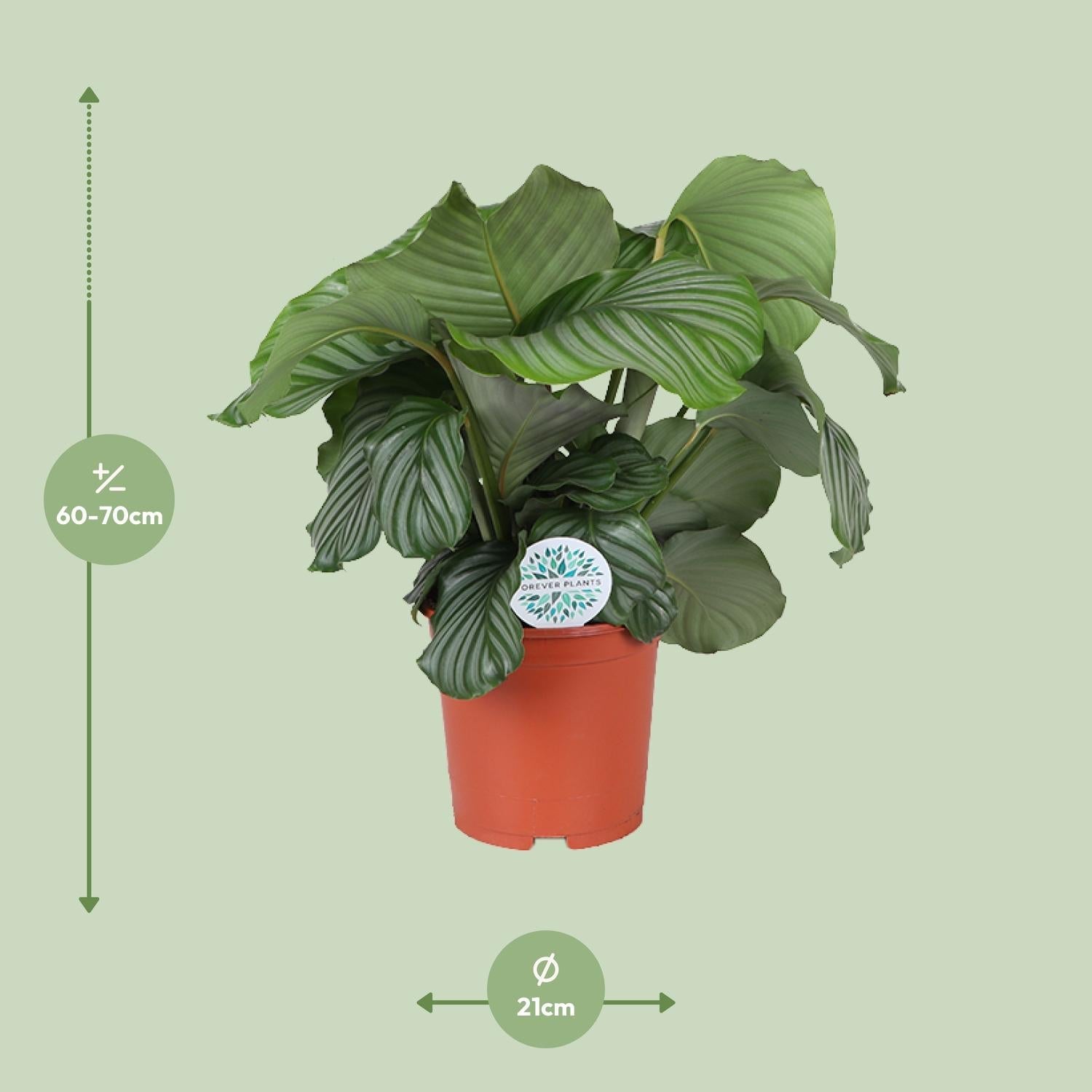
















































The Calathea Orbifolia is the undisputed queen among the Calatheas. With its extraordinarily large, circular leaves and elegant silver-gray striped patterns, it is a true design statement for any urban jungle. If you are looking for a plant that impresses with both its sheer size and its graphic beauty, the Calathea Orbifolia is the perfect choice for your home.
Origin & Characteristics
The round-leaf Calathea originates from the tropical rainforests of Bolivia. There, it grows in the shaded, moist ground under the protective canopy of giant jungle trees. Like all members of the Marantaceae family, it is a "prayer plant": at night, it lifts its leaves upright, almost as if it were praying, and unfolds them again in the morning to catch the light. Furthermore, the Calathea Orbifolia is an excellent natural air purifier.
Appearance & Growth
The characteristic roundish leaves, which can reach a diameter of over 30 cm with proper care, are the plant's hallmark. When kept indoors, the plant usually reaches a height between 25 and 65 cm. Its growth is bushy and compact, making it an ideal standalone plant. The top of the leaf gleams in a fresh green, traversed by striking silver streaks.
The Ideal Location for Calathea Orbifolia
Where does the round-leaf Calathea feel most at home?
The Calathea Orbifolia location should be bright to semi-shaded, but without direct sunlight. Too much light causes the delicate markings to fade and can burn the leaf edges. Since it comes from the tropics, it loves a constantly high humidity of over 60%. A spot in a bright bathroom or near a humidifier is therefore ideal. Drafts and temperatures below 18 °C should definitely be avoided.
Caring for & Watering Your Calathea
When it comes to Calathea Orbifolia care, a gentle touch is required. The soil should always be evenly moist, but never wet. Waterlogging inevitably leads to root rot, while a completely dried-out root ball causes stress. It is best to use room-temperature, lime-free water for watering. Regularly misting the leaves helps simulate tropical conditions and prevents brown tips.
Typical Problems & Solutions
Why is my Calathea getting brown leaf edges?
This is the most common problem and is usually a sign of low humidity or watering with water that is too hard (high lime content). Increase the ambient humidity and use filtered water. Curled leaves, on the other hand, often indicate thirst or too much heat.
Natural Care Support
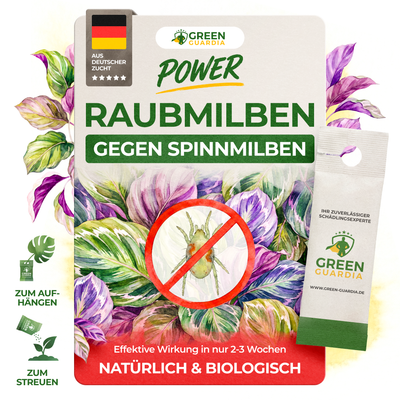
During winter, dry heating air can occasionally lead to spider mites. Neem oil has proven effective for strengthening general plant health and as a supportive care measure. It naturally conditions the leaf surfaces of your Calathea Orbifolia and helps the plant maintain its vitality against external influences.
Propagation
The safest way to propagate is by dividing the rootstock when repotting in the spring. Ensure that each section has a healthy root system and at least one to two leaves. Place the young plants in a particularly warm and humid spot after division to help them take root.
FAQ about Calathea Orbifolia
Is Calathea Orbifolia toxic to pets?
Good news for pet owners: Calathea Orbifolia is considered non-toxic to cats and dogs. It can therefore be placed safely in any room.
How often should I fertilize the round-leaf Calathea?
During the growth phase from March to September, the plant appreciates a dose of liquid fertilizer at half strength every two to four weeks. In winter, it does not require fertilization.
Why do the leaves of my Calathea move?
That is a natural process! The plant has small joints at the base of its leaves, which it uses to orient the leaves toward the light or fold them upward at night to retain moisture.
Take Action Now: Bring the Tropics Home
The Calathea Orbifolia is more than just a houseplant – it is a living work of art. If you are ready to pay a little attention to its humidity needs, it will reward you with its majestic growth. Would you like to enrich your home with this extraordinary beauty? Discover our high-quality Calathea Orbifolia now and create your own green paradise!
✨ Pro Tip: Regularly clean the large leaves of dust with a soft, damp cloth. This not only ensures a beautiful shine but also helps the plant filter pollutants from the air even more efficiently.